Gdansk Danzig
German: Danzig (“DAHN-tsig”), Polish: Gdańsk (“g-DAHÑ-sk”), Hebrew: גדנסק, Yiddish: דאנציג / Danstk
Jewish merchants traded in the port city of Danzig by the 1200s CE, but Jews were banned from the city in 1309. Restrictions on Jewish residence persisted over the next few centuries as Danzig passed between German and Polish rule. Although Jewish merchants paid high fees to enter the city’s trade fairs, it was not until the mid-1700s that Jews were allowed to settle more permanently.
Danzig became part of the Prussian (German) Empire in 1793. In the early 1800s the city was home to both Polish and German speakers as well as Catholics, Protestants and Jews. By 1821, the Jewish population reached about 2,260 (approximately four percent of the total population). Five main Jewish congregations each maintained a separate synagogue.
Despite anti-Jewish regulations and outbursts of antisemitic violence in 1819 and 1821, Jews played an active role in the economy and society of Danzig. Jewish entrepreneurs opened a grain plant, a chocolate factory and a lumberyard among other small shops and artisan workshops. A number of Jewish men were elected to the city council and in the 1850s some served as executives of the merchant guild. Previously separated by worship styles and social class, the Jewish congregations of Danzig united in the 1880s and opened the Grand Synagogue in the center of the city.
Most of the roughly 2,500 Jews who lived in Danzig by the early 1900s considered themselves German citizens of the Jewish faith. More than 90 Jewish men from Danzig gave their lives fighting for Germany during World War I (1914-1918). Survivor Norbert Lachman recalled how uncles on both sides of his family fought in the conflict. As with most Jewish families, his relatives felt safe from the antisemitic movements gaining popularity throughout Europe.
Danzig became a Free City under the jurisdiction of the League of Nations in 1920. Lachman, whose father was a baker, remembered that trade through the port meant “we had a lot of people come to visit our city” to participate in the grain and fish markets. Many Jews earned a living as doctors and lawyers, while others worked as poor artisans in fields such as tailoring and carpentry.
The Jewish community of Danzig provided vital aid to tens of thousands of Jewish refugees fleeing Russia through the city’s port in the 1920s. A few hundred Russian Jews who stayed in Danzig followed more traditional Orthodox customs and were among the first to join the Zionist movement that advocated for the creation of a Jewish state. In light of growing antisemitism, more and more members of the German-speaking Jewish community rallied to the Zionist cause.
In May 1933, four months after Hitler was appointed Chancellor of Germany, the Nazi party achieved a majority in the Danzig government. Jews’ rights were restricted, Jewish stores were boycotted and the city opened segregated schools for Jewish children. Nazis used propaganda to instigate a violent antisemitic pogrom in October 1937. By the end of the year about half the Jewish population had fled the city.
After a series of attacks in which multiple synagogues were destroyed, in late 1938 the Jewish community organized efforts to help the remaining Jewish residents escape Danzig. The Great Synagogue and sacred objects were sold to finance emigration to other countries. By the summer of 1939, only about 1,700 Jews remained in the city. After World War II started on September 1, 1939, Jews were confined to ghettos or sent concentration camps. More deportations followed in 1941 and any Jews found in the city two years later were deported directly to the killing center of Auschwitz-Birkenau. Only about 20 Jews survived the war in Danzig.
zoominzoomout
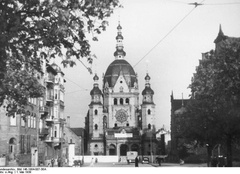
The Great Synagogue of Danzig was built here in 1887. The prominent landmark once stood more than 175 feet tall before being destroyed in 1939.
Estimated Total Population ca. 1929
235,235
Estimated Jewish Population ca. 1929
5,870 (2.5%)
Estimated Jewish Population at end of WWII
350
Gdansk Danzig: Photographs & Artifacts
Previous
Next
-
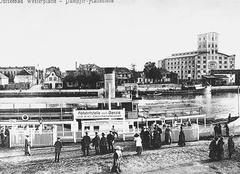
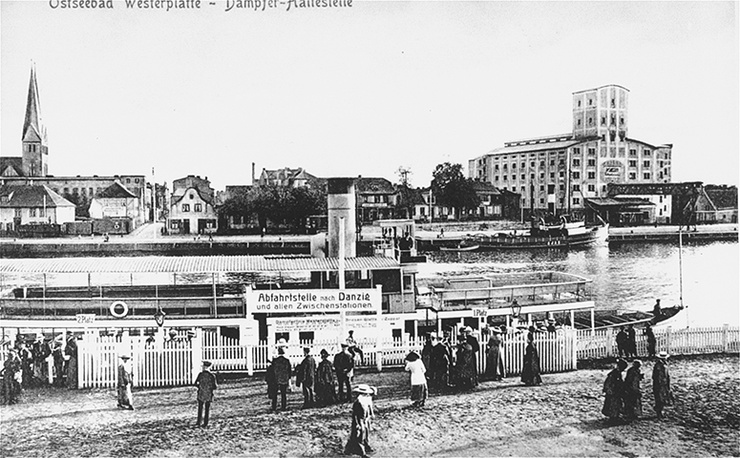 View of the city of Danzig. In the foreground passengers disembark from a tour boat. The grain business of Simon Anker (president of the Jewish community) can be seen across the river, to the right. Photo ca. 1920 - 1929. Credit: United States Holocaust Memorial Museum, courtesy of George Fogelson
 -
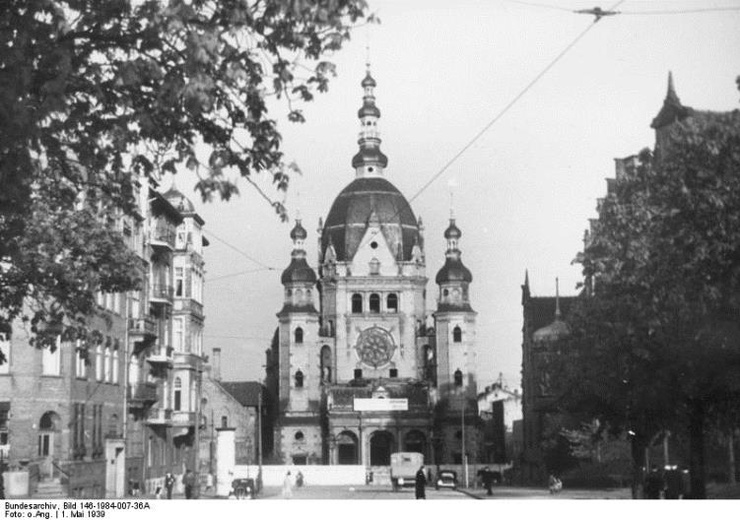 The Great Synagogue, 1 May 1939. Credit: Bundesarchiv, Bild 146-1984-007-36A / CC-BY-SA 3.0
 -
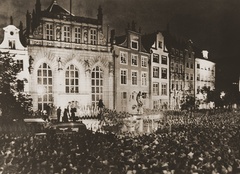
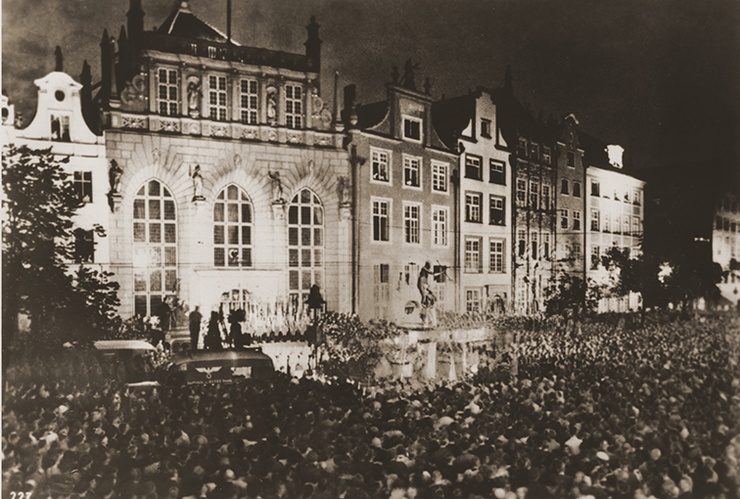 At a rally in the Langer Markt, Danzig residents call for the city's annexation by the Third Reich, August 1939. Credit: United States Holocaust Memorial Museum, courtesy of Debra Gierach
 -
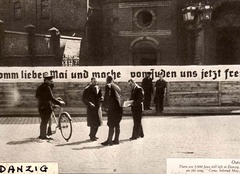
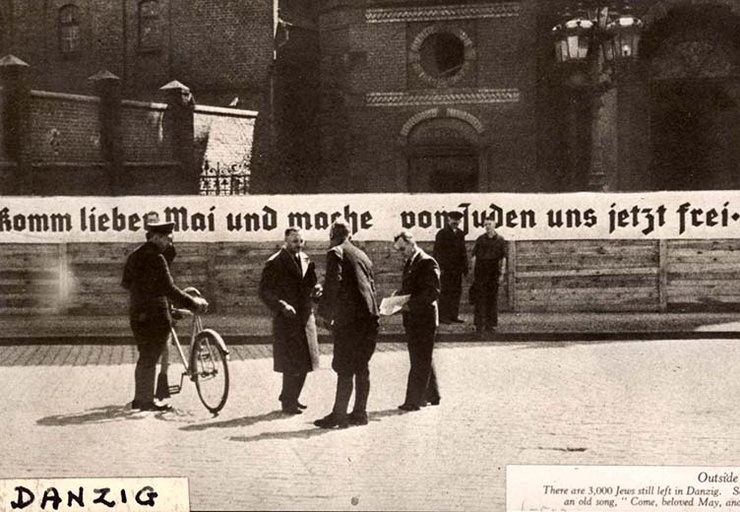 An antisemitic inscription outside a closed synagogue, May 1941. It reads: "Come dear May and make us free from Jews." Credit: Yad Vashem
 -
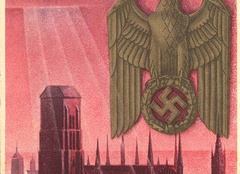
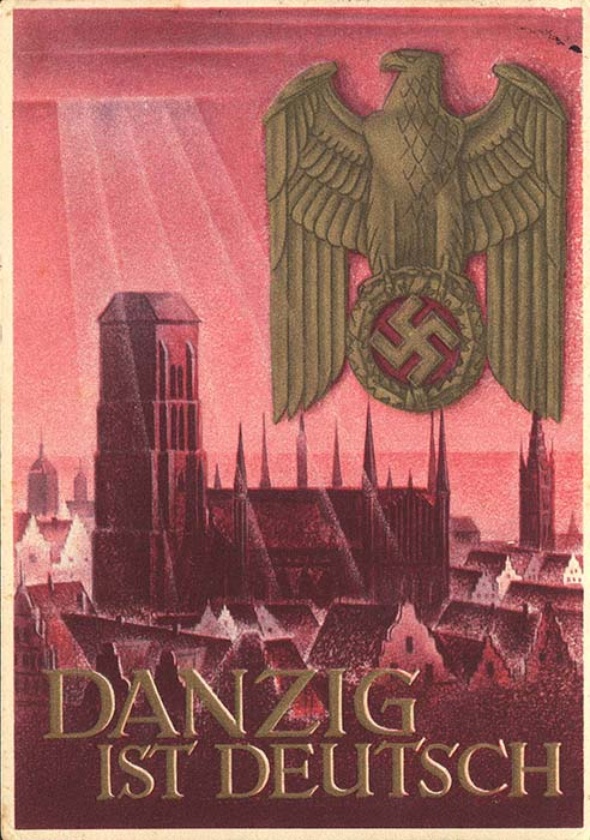 A postcard with an inscription that reads: "Danzig is German." Previously part of Germany, after World War I Danzig was declared a semi- autonomous Free City in a customs union with Poland. Credit: Yad Vashem
 -
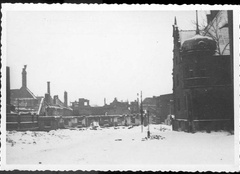
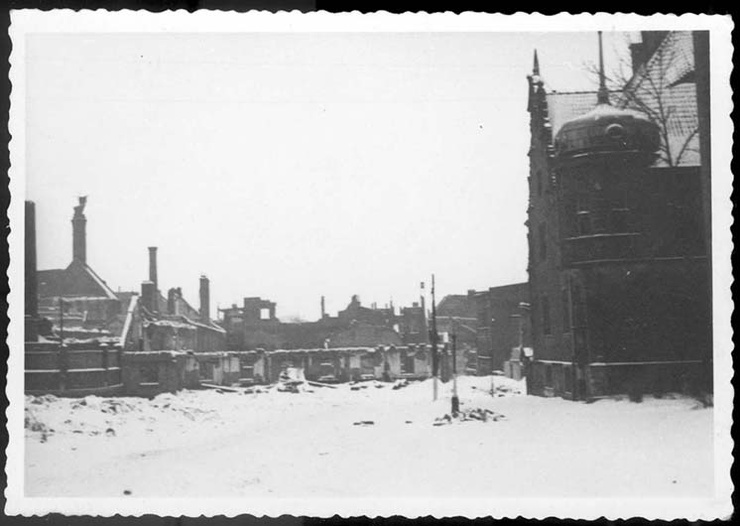 Ruins in the city immediately after the war. Credit: Yad Vashem
 -
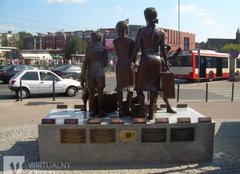
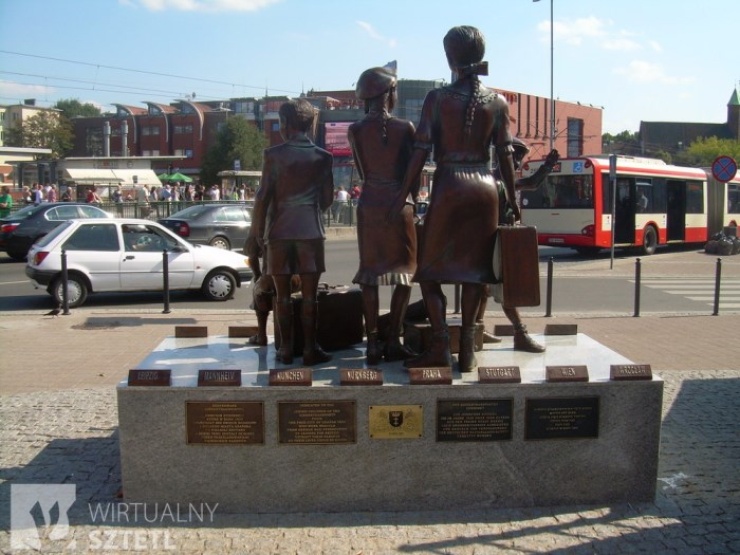 Kindertransport memorial in Danzig (today known as Gdańsk, Poland), September 2009. Credit: sztetl.org.pl/Marcin Wygocki
Destroyed Communities Memorial Slope
Gdansk Danzig: Survivors
Lachman, Norbert
I was in World War II and I was in the Korean War. The reason I was a second time in the Army, I wanted to thank the country for letting me in and my family in. I felt that I was obligated.